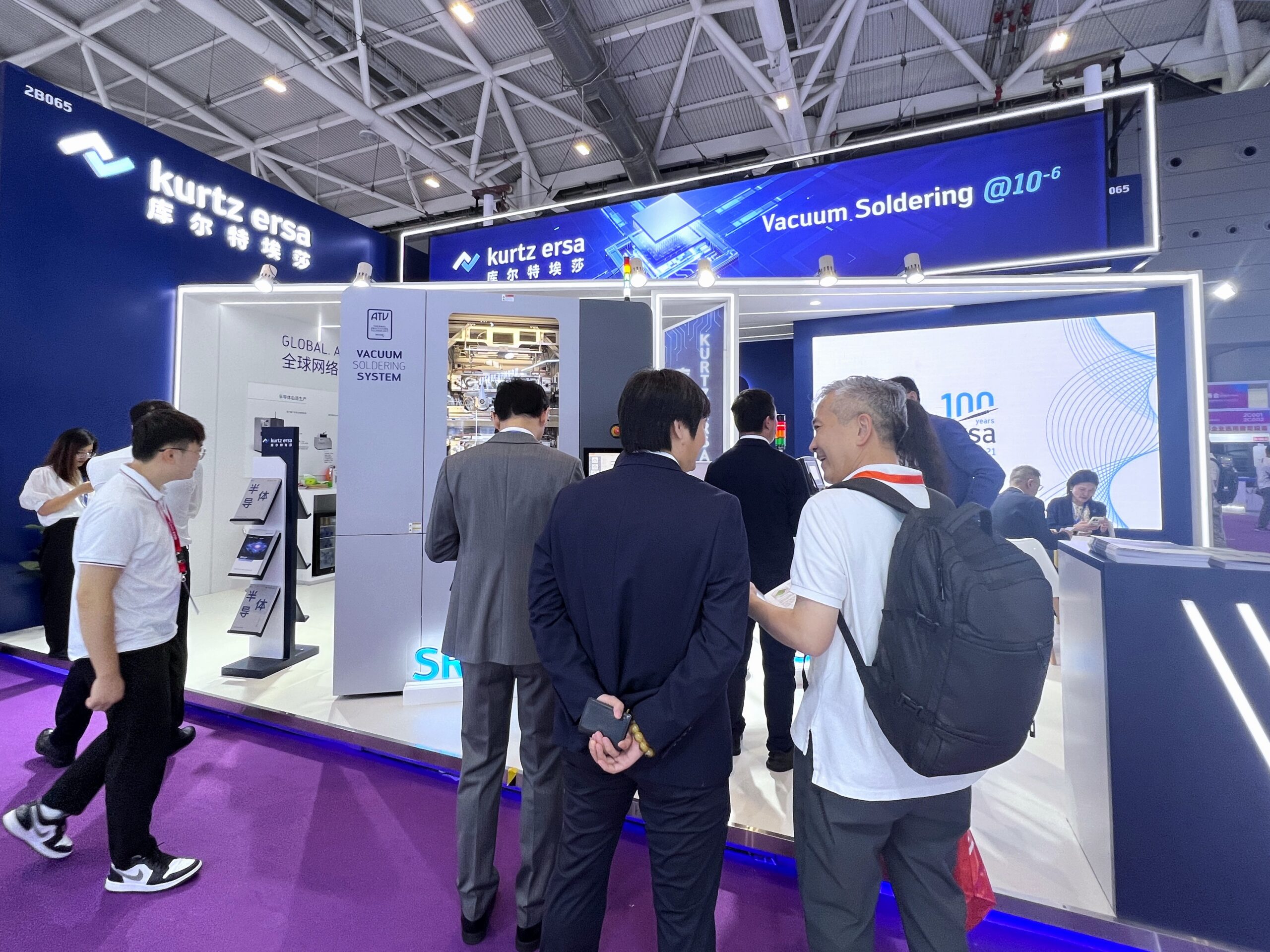
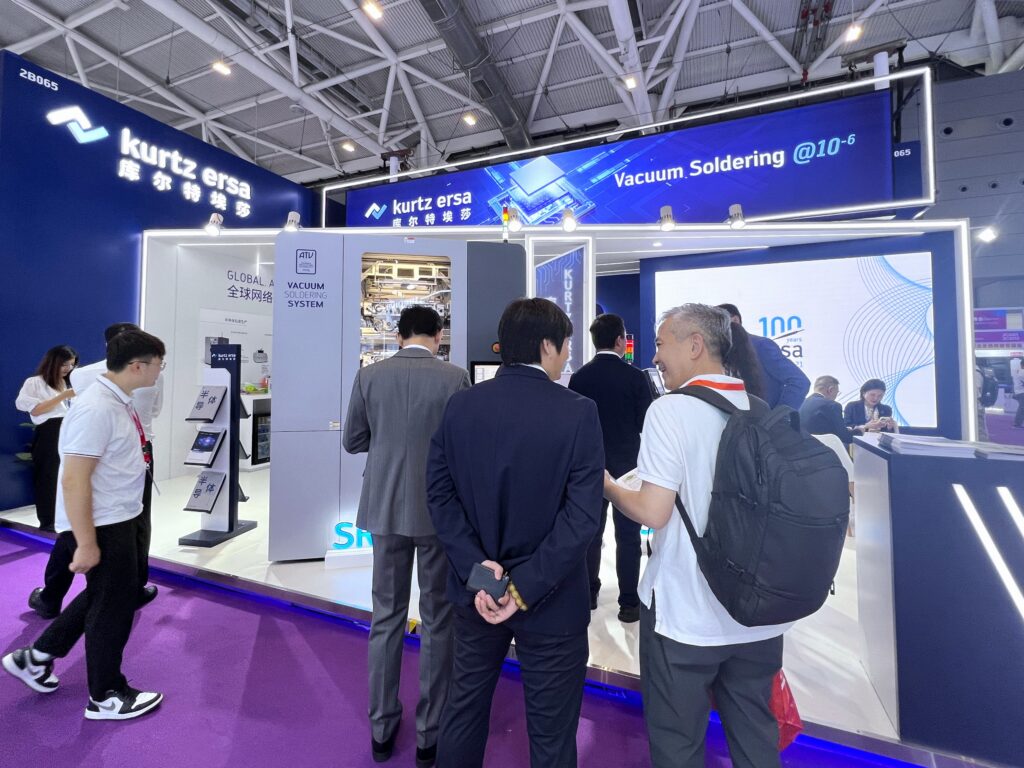
At China International Optoelectronic Exposition (CIOE), one of Asia’s largest optoelectronics and semiconductor exhibition, many buyers shared the same concern: AI chips and advanced sensors are getting more expensive and often hard to secure. When materials are costly and scarce, every scrap incident wastes money and time. As you trace from joint outcomes back through the process, the trail often leads to the “weather” in the chamber: the formic acid, oxygen level, and vacuum profile that quietly set the stage.
What good process control looks like?
Strong outcomes start with clean surfaces, low oxygen, and a vacuum step at the right moment. Formic acid at elevated temperature helps lift oxides so solder spreads the way it should. Repeated evacuation and nitrogen backfill hold oxygen to single‑digit ppm, limiting re‑oxidation during wetting. A well‑timed vacuum near the thermal peak clears trapped gases and lowers voids. Add verified temperature uniformity across the working area, and the process begins to behave the same way shift after shift, lot after lot.
What this means for customers?
Cleaner wetting, fewer voids, and even heat flow cut rework and protect high‑value material. Consistent results shorten validation and smooth customer qualifications. For SiP, SiC power devices, and AI‑related parts with tight thermal budgets, a defined atmosphere window supports stable junction temperatures and repeatable attach quality. The outcome is clear: stronger performance margins, fewer scrap events, and a more direct path to first‑pass success.
Vacuum soldering in action
Setting the right “weather” is practical. Define oxygen limits for your recipe, then use evacuation and purified nitrogen backfill to reach and hold that level. Introduce formic acid during the oxide‑removal zone at the specified temperature. Apply vacuum at the peak of the thermal profile to clear entrapped gases. Confirm temperature uniformity with sensors across the product area and keep the data. Small adjustments to timing and setpoints can move wetting, void content, and throughput in the desired direction without adding flux or complexity.
From show floor to stage
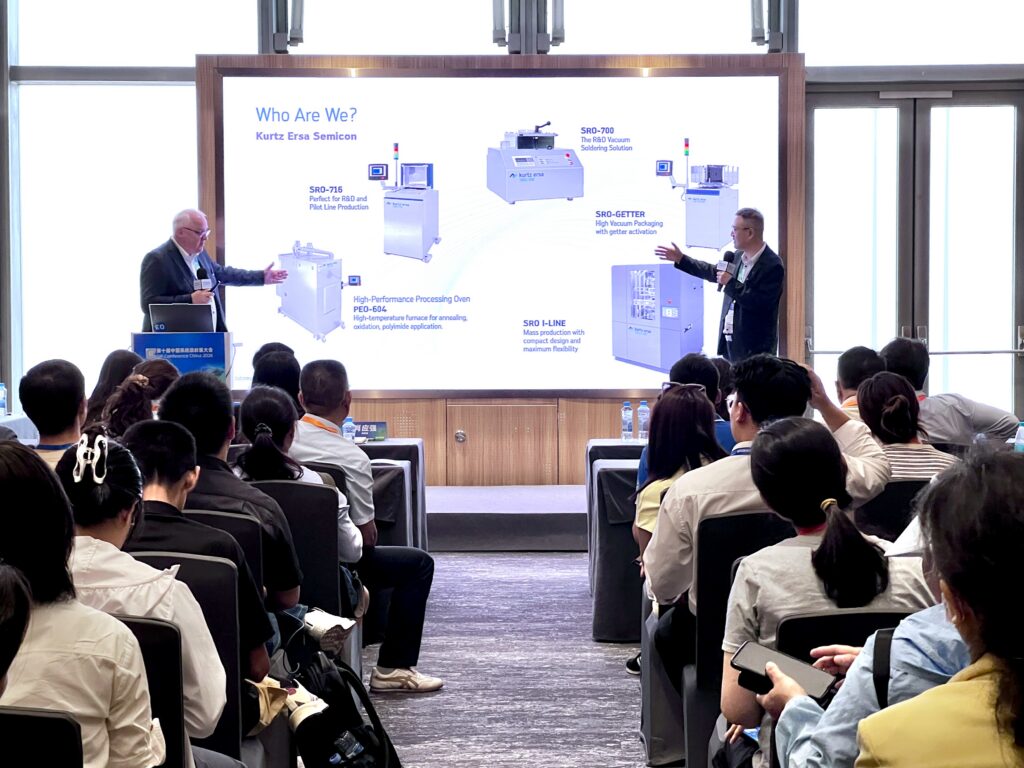
With that context, the Kurtz Ersa sharing at the 10th SiP Conference China which was held concurrently with CIOE sits in the right place. During the CIOE show, Kurtz Ersa Semicon Business Development Director, Bert van Weelde and Kurtz Ersa China General Manager, David Chen spoke at the SiP Conference about formic acid and its influence on advanced packaging. They highlighted cleaner surfaces, improved wetting, and lower voids when formic acid atmospheres are combined with controlled vacuum and tuned thermal profiles. Thank you to everyone who stopped by our booth at CIOE. If you are planning changes or looking to tighten current processes, contact us to schedule a conversation or a demo. We’ll walk through your goals, discuss how to set the right “weather” in the chamber, lifting yield and achieving first‑pass success.